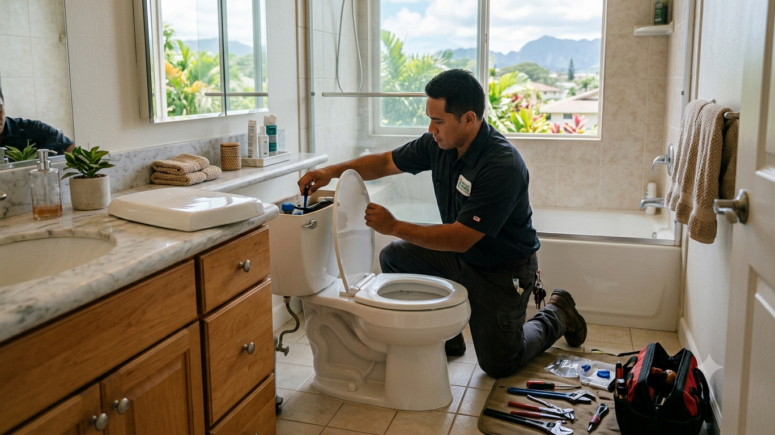
A toilet rarely goes from perfectly fine to completely unusable without giving you some warning.
The signs can be easy to dismiss: a toilet that runs for a few extra seconds, a handle that feels different, a bowl that drains more slowly than it used to, or a small puddle that appears near the base. Some problems are simple component failures. Others can point to a blockage, leak, or issue farther into the plumbing system.
Knowing what those signs mean can help you decide when a minor repair may be enough and when it makes sense to bring in a professional.
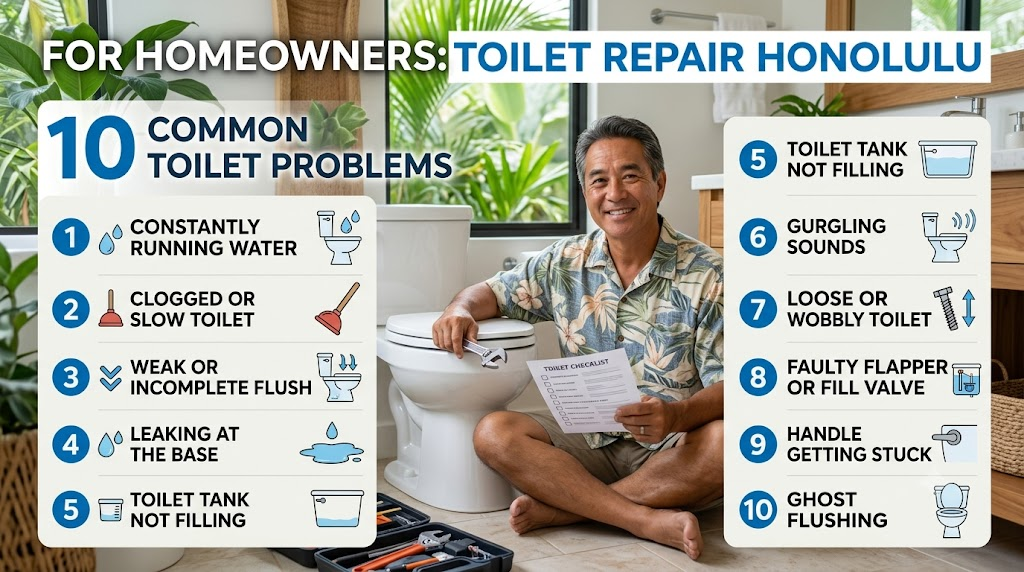
For homeowners looking for toilet repair Honolulu services, here are 10 common problems worth knowing about.
When Should You Call a Plumber for Toilet Repair in Honolulu?
It’s a good idea to call a professional plumber if your toilet keeps clogging, runs constantly, leaks around the base, flushes poorly, or feels loose on the floor. Cracked porcelain and problems that keep coming back after a quick fix are also signs that the issue may need a closer look. While some toilet problems are caused by worn or faulty parts, recurring clogs, leaks, or issues affecting other fixtures in the home can sometimes signal a larger plumbing problem.
For Honolulu homeowners, having a plumber inspect the toilet can help pinpoint what’s actually causing the problem. Based on the condition of the toilet and its components, the plumber can determine whether a simple repair, replacement of a part, or a new toilet is the most practical solution.
1. The toilet keeps running after you flush
That faint hissing sound after a flush is easy to ignore, especially when the toilet eventually stops.
But a toilet that continues running is usually losing water somewhere inside the tank. A worn flapper is one common cause. The flapper seals the opening between the tank and bowl, and when it no longer seals correctly, water can continuously leak into the bowl.
The EPA recommends checking toilets for silent leaks with a simple dye test and notes that worn flappers are a common cause of toilet leaks.
If replacing or adjusting the internal component does not stop the running, the fill valve or another part of the flushing mechanism may need attention.
2. The flush has become weak
A weak flush is not necessarily a sign that the toilet itself needs to be replaced.
The problem could be a partially blocked trapway, an issue with the tank’s water level, or a malfunctioning flush mechanism. If the toilet used to clear the bowl normally and gradually became less effective, that change is worth investigating.
A toilet that requires repeated flushing is particularly worth checking rather than simply accepting it as normal operation.
3. It clogs over and over
Almost every household deals with an occasional toilet clog.
Repeated clogs are different.
If plunging clears the toilet temporarily but the same problem keeps returning, there may be a partial obstruction that has not been removed. The cause can also be related to what is being flushed or, in some situations, a problem farther along the drain.
If other fixtures begin draining slowly at the same time, don’t assume the toilet is the only problem.
4. There is water around the toilet base
Water on the bathroom floor deserves more attention than a few drops from a wet bathroom mat or someone stepping out of the shower.
If moisture repeatedly appears around the base after flushing, the source needs to be identified. It could involve the toilet’s connections, supply line, or seal at the base.
The important point is that drying the floor does not fix the leak. If the water comes back, the toilet should be inspected.
5. The toilet moves when you sit on it
A toilet should sit firmly on the floor.
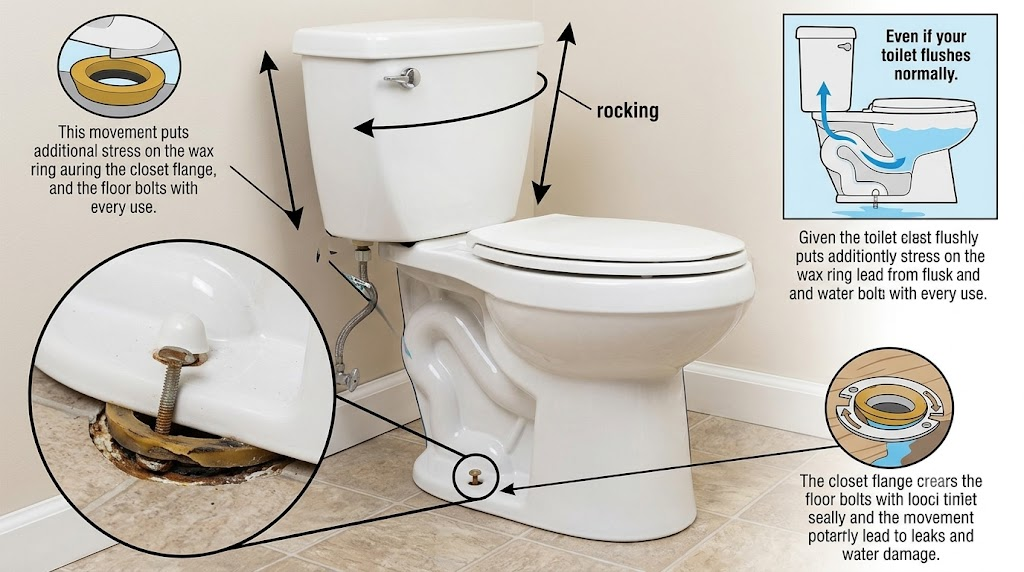
If it rocks from side to side, something is not right. Loose mounting hardware can be involved, but movement can also occur alongside problems with the seal underneath the fixture.
A rocking toilet may still flush normally, which is why this problem often gets ignored. But movement puts additional stress on the connections every time the fixture is used.
6. The porcelain is cracked
A visible crack in the tank or bowl is not something to treat like an ordinary cosmetic imperfection.
Porcelain can fail unexpectedly, and a crack that is already allowing water to escape should not be patched and forgotten as a permanent solution.
The right response depends on where the damage is and how extensive it is. In some cases, replacing a damaged component may be possible. In others, replacing the entire toilet makes more sense.
7. The handle no longer works properly
Sometimes the problem is obvious: you press the handle, and nothing happens.
Inside the tank, the handle is connected to the flushing mechanism. A disconnected chain, damaged handle, or worn internal part can prevent that mechanism from operating correctly.
This is one of the problems that may have a relatively simple fix. But if the toilet is already experiencing other symptoms, replacing the handle alone may not address the underlying issue.
8. The toilet makes strange noises
A toilet is supposed to make some noise. The refill sound after flushing is normal.
What deserves attention is a toilet that periodically refills when nobody has used it, whistles while filling, or produces other unusual sounds that have appeared recently.
A toilet that switches on by itself is particularly worth checking because it can indicate that water is escaping from the tank into the bowl.
You can test for a silent leak by adding a few drops of food coloring to the tank, waiting about 10 minutes without flushing, and checking the bowl for colored water. If color reaches the bowl, the EPA says the toilet leaks. Flush afterward to prevent staining.
9. The bowl rises too high during a flush
There is a difference between a toilet that drains slowly and one that is close to overflowing.
When the bowl fills unusually high during a flush, stop flushing repeatedly. A blockage may be preventing water from moving through the drain properly.
A plunger may resolve a straightforward clog. If it does not, or the problem keeps returning, continuing to force water through the fixture can make the situation worse.
10. You keep repairing the same toilet
This is the problem that is often overlooked because none of the individual repairs seem serious.
One replacement flapper is normal maintenance. One clogged toilet is not necessarily concerning. But if the same fixture has developed repeated leaks, flushing problems, clogs, loose components, and other failures, it may be time to consider the bigger picture.
At that point, a professional can determine whether another repair is appropriate or whether replacement would be more practical.
If a new toilet is needed, EPA WaterSense-labeled models are independently certified for water efficiency and performance.
Should You Repair or Replace Your Toilet?
Not every toilet problem calls for a complete replacement. If the issue is a worn flapper, broken handle, faulty fill valve, or another replaceable part, a simple repair may be all that’s needed.
Replacement may make more sense if the toilet has cracked porcelain, keeps leaking, clogs frequently, or continues to have flushing problems even after repairs. Older toilets that use a lot of water may also be worth replacing with a more efficient WaterSense-labeled model.
The right choice depends on the toilet’s overall condition, what’s causing the problem, and how much ongoing repairs are likely to cost. Having a professional plumber take a look can help you decide whether repairing the existing toilet or installing a new one is the more practical option.
When is it time to call a plumber?
Not every toilet problem requires a service call.
A homeowner may be able to handle a straightforward flapper or handle replacement. But professional help becomes more useful when the problem keeps coming back, water is leaking onto the floor, the porcelain is damaged, the toilet repeatedly backs up, or the source of the problem is unclear.
There is another important clue: multiple plumbing fixtures developing problems at the same time.
If a toilet is slow and other drains are also backing up or draining poorly, the issue may involve more than the toilet itself. That is a different situation from replacing a worn tank component.
For homeowners searching for a plumber Honolulu residents can contact for toilet and fixture problems, Waialae Plumbing lists toilet and sink repair among its services and specifically includes toilet/fixture repair or installation in its service request options. The company says it has served Oahu since 1994 and works with both residential and commercial customers.
Its broader Oahu plumbing services include drain cleaning, leak detection, water heater work, potable water lines, sewer-related services, and toilet/fixture repair.
What to check before calling a local plumber near me
If you are searching for a local plumber near me, have a few basic details ready before making the call.
Note what the toilet is doing, when the problem occurs, whether it happens after every flush, and whether other fixtures are affected. If there is visible water, identify where it appears rather than assuming it is coming from the toilet itself.
That information can make the initial conversation more useful and help the plumber understand what needs to be investigated.
Waialae Plumbing currently lists service Monday through Friday, 7 a.m. to 4 p.m., and states that it serves all areas of Oahu. Its service request form allows customers to select toilet/fixture repair or installation when describing the work needed.
FAQ
How do I know if my toilet has a hidden leak?
Add a few drops of food coloring to the toilet tank without flushing. Wait about 10 minutes and check the bowl. If colored water appears, water is leaking from the tank into the bowl. Flush after the test to avoid staining.
Is a running toilet serious?
It may start as a worn or misaligned component, but a running toilet can continuously waste water. The EPA identifies worn flappers as a common cause of toilet leaks.
Should I repair or replace my toilet?
That depends on the condition of the fixture and the nature of the problem. A worn internal component may be worth repairing, while repeated failures, significant porcelain damage, or an inefficient older fixture may make replacement worth considering.
Does Waialae Plumbing repair toilets?
Yes. Waialae Plumbing lists toilet and sink repair among its plumbing services and accepts service requests for toilet/fixture repair or installation.
Does Waialae Plumbing serve Honolulu?
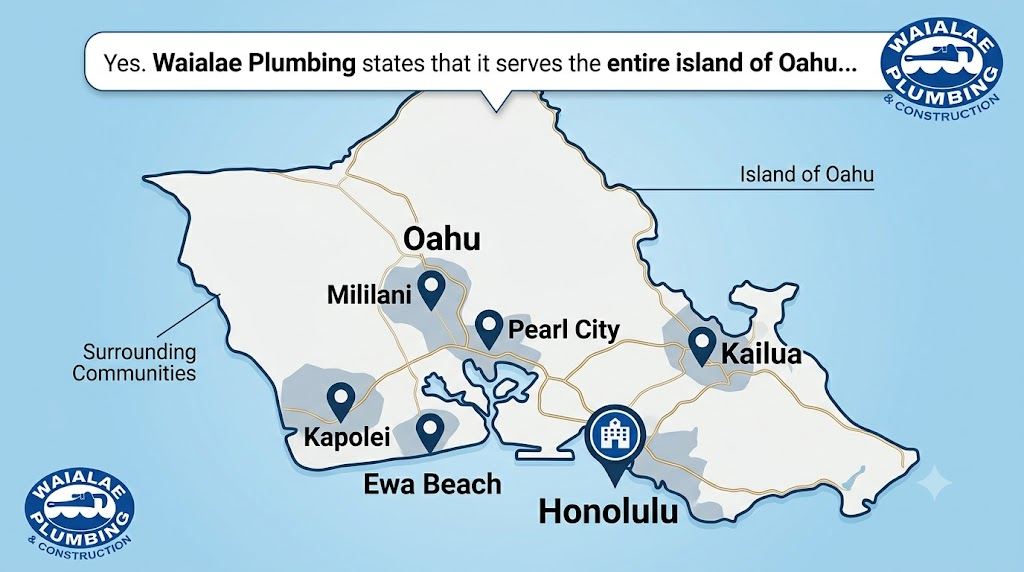
Yes. Waialae Plumbing states that it serves the entire island of Oahu, including Honolulu, Kailua, Pearl City, Mililani, Kapolei, Ewa Beach, and surrounding communities.
Toilet problems are easier to address when you catch them early
A toilet does not have to be overflowing before it deserves attention.
A recurring clog, unexplained water, a toilet that runs by itself, or a fixture that has started moving can all be useful warning signs. Sometimes the solution is a small replacement part. Sometimes the problem requires a closer look at the plumbing beyond the toilet.
If you need plumbing services Honolulu homeowners can use for toilet and fixture issues, Waialae Plumbing provides toilet repair and installation as part of its Oahu plumbing services.
Request plumbing service from Waialae Plumbing and describe the problem you are experiencing so the appropriate service can be arranged.